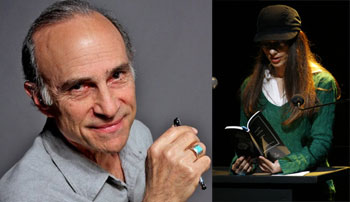
It struck me that, after talking to Lou Anders last week, I never really got to ask him about how both he and the field of science fiction had changed since he started at Pyr five years ago — and that seemed to me to be a question well worth asking. After all, I remembered quite well my surprise when he broke the news.
As a reader, I'd bought a couple of Prometheus Books. I rather liked them, but overall, I had some not-so-sympathetic feelings towards the publisher. As a fortean reader, I found their skeptical stance on occasions bracing, and other times, restrictive. How would a highly skeptical publisher deal with a genre of fiction that picked up where skepticism dare not tread?
Once I took Lou back, well, he mentioned some things that really brought back my past, including his work in Argosy Magazine. And that has an interesting connection to Prometheus and the fortean world. For those who don't know, in its original incarnation, when I first used to read it back in the dark ages, Argosy was a sort of "men's magazine," without the girlie pics, but quite inclined to publish even more scurrilous photos — of flying saucers!
But that was where it started, and they were also, if I remember correctly (and I may be wrong), they also were giving us Bigfoot, and whatever other monsters we wanted. Maybe I even saw the infamous never-seen-since photo of the Thunderbird there.... If so, I'm not telling.
But that journey from the original Argosy to the New Weird Re-incarnation of Argosy to ... Prometheus? So there's a tangled web. Little of which involves Anders.
03-18-10: S 2010 Interview with Alta Ifland and Stephen Kessler
"I had to do it; it was a way of both coming to terms with the experience, of documenting the experience, of commemorating it..."— Stephen Kessler
When I read 'The Mental Traveler' in preparation for my conversation with Stephen Kessler and Alta Ifland, to me it seemed to have a lot in common with Alta Ifland's 'Elegy for a Fabulous World.' For both writers, Kafka was an obvious influence. Ifland's surreal tales of life in the Eastern bloc under communism create the same sort of restrained but surreal atmosphere that one finds in Kafka. Absurdity happens regularly.
Kessler's novel also partakes of Kafka, both literally — in that he refers to Josef K in a passage just before he's checked into a mental hospital — and inspirationally. For some the book will read like what you might expect would happen were Franz Kafka himself to decide it was a good idea to tune in, turn on and drop on the west in the late 1960's. Without doubt Kafka would have ended up at Altamont.
Both writers expressed surprise after my interview that I was able to find so much in common between the two books — and this even though they are married! I have to admit, I was surprised this was the case. I didn't see it coming, but then again, I was looking at the books, not the people.
Alta Ifland and Stephen Kessler and I had a grand time as I uncovered one commonality after another between their work. For one, thing, both come from the world of poetry, and they both use their words with great care.
On the other hand, Alta Ifland only began writing in English recently. She talked about writing in a variety of languages and how that influences her writing. I find this aspect of writers who write in more than one language really fascinating, because to a one, they all say that their thoughts are shaped differently in different languages. 'Elegy for Fabulous World' (and Alta Ifland has a lot to say about that title choice) is Ifland's first work written entirely in English.
Kessler, I learned, had been an old hand around KUSP, having run a poetry show at the station long, long ago. He's also been a fixture on the Santa Cruz literary scene since forever. He published and wrote for The Independent, a trouble-making newspaper back in the days when newspapers made trouble.
03-17-10: SF in SF, Saturday, March 13, 2010 : Chaz Brenchley Reads at SF in SF
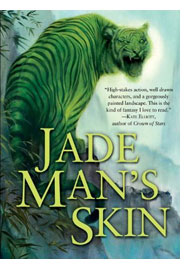
Reading from Jade Man's Skin
It's not just the accent, it's the content. If you were wondering whether or not I was out in some far-reaching domain when I wrote about 'Jade Man's Skin' by Chaz Brenchley / Daniel Fox, then I'm hoping that the reading by the author will cure all doubts. Brenchley's work is really quite amazingly well-written. And it is equally well-read.
SF in SF just continues to entertain, to engage, and to bring reading out into the world as an active activity, not just something you do sitting around in the livingroom. (Though that's good too.) The whole experience of SF in SF is what is worth considering. Terry Bisson is wisely economical in his introductions, and the set up is wisely un-economical in the readings. Attendees get a good, solid chunk of material read to them by the writers.
Hearing the writers' voice, twice over — not just two writers, but hearing the prose voice read by the speaking voice — give an informative point-of-entry into the works being read from.
Brenchley's latest novels are fantasies set in feudal China, where he re-makes history to suit his own needs as a writer, which will, I believe suit the needs my readers.
That is, he writes really gorgeous prose wrapped around great characters and a superbly-conceived, supernaturally-informed perception of the world.
If your characters believe in dragons, monsters and supernatural intrusions into reality, then your readers will as well. By imbuing the belief of the supernatural in your characters' perceptions, you make it seem as if it is a part of then atural world.
It's not an easy trick, but Brenchley manages it with prose that I believe he would prefer not be called poetic, because as a prose writer he chooses his words just as carefully as any poet. He clearly writes in a manner that is meant to be read out loud. It's an unusual style, which gives his work a feel unlike other fantasy.
03-16-10: SF in SF, Saturday, March 13, 2010 : Malinda Lo Reads at SF in SF
Reading from Ash
I know I promised the principals that I'd podcast in a different order, but I'm a slave to sequence. I really like to do these things in a particular order, and to a certain extent, that is the order in which they happen — interviews excepted.
But sequence is of no consequence when the readings are as good as those at SF in SF this past Saturday. To a certain extent, I had no idea what to expect. This was particularly true with Malinda Lo, whose book 'Ash' (Little Brown Books for Young Readers / HarperCollins ; September 1, 2009 ; $16) I first saw lodged on the side of the bar in the lobby of the Variety Children's Charity Theater. Sickness prevented the folks from Borderlands from showing up. So I barely had time to grab a copy and thumb through it before the reading began. I had no idea this was pigeonholed as a "YA" book.
I'm guessing the fact that I did not know that 'Ash' was "YA" probably contributed to my enjoyment of Lo's reading. Whatever the projected age-range for final product sales, the upshot of 'Ash' is that Lo perfectly captures the sort of surreal feel of the best fairy tales.
The high-concept product pitch line for 'Ash' is "Cinderella with a lesbian twist," but, as one might expect, such a sales line does the work itself no justice. I admit that I probably would not have ever got the "cinder — ash" connection with a prompting from Lo before the event. And in this reading, the whole world of faerie is far more menacing than the standard-issue. Lo spent a fair amount of time studying the Irish tradition of faeries, and her version is nothing like a Fairy Godmother; it's more like a supernatural Godfather, making you a deal you cannot refuse, though you know you should. Fortunately for my readers and listeners, there is no need to refuse — just follow this link and listen to the totally, completely, one-hundred percent free MP3 file.
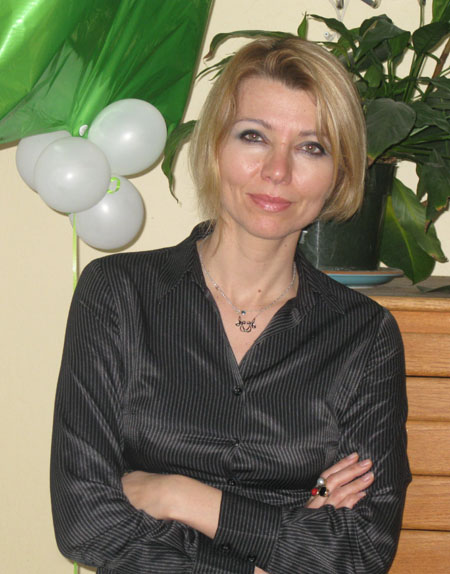
03-15-10: A 2010 Interview with Elif Shafak
"I know that culture that exists in my country, that is carried on by women, generations of women."
—Elif Shafak
I thought myself under-prepared to speak with Elif Shafak. When I read the book, it was for pure enjoyment, not with an eye for speaking with the author. But then perhaps, with a book of this nature that is the perfect preparation for speaking with not just the author, but the authors. All the voices.
You can certainly hear them all when you speak with Elif Shafak; the prudent 21st-century hausfrau, the passionate 13th-century mystic, the mysterious writer living a world away from wherever you are. After the interview, I talked to a friend about my experience, and he suggested that Shafak was a shamanic presence. The words are on a printed page and the voice is encoded by digital technology. The supernatural is not, in this case, shy or retiring.
Whenever I do an interview, though it is just myself and the interviewee in the room, there are others who help make it happen, and their contribution to the final digital document is critical. In this case, Martha Cullimore and Holly Watson went way out of their way to bring Elif Shafak to Santa Cruz. They were major threads in the warp and woof of this particular tapestry.
It's not surprising, I suppose, that a conversation this easy and this enjoyable brings to mind the work in discussion. When I read 'The Forty Rules of Love' for my confab with the ever-perceptive Alan Cheuse, I found myself really entranced by the meta-fictional aspects of the novel, by the gorgeous prose, by the involving — and huge! — cast of characters.
But when we spoke, it was a different matter. Sitting down to talk to her, the spiritual aspects of the novel seemed more present, more pressing. The layers of reality that this novel creates, the echoing reflections of mirrors aimed at mirrors, seemed to clamor for attention. And though I felt as if I had not prepared at all, the conversation unfolded as if I were talking to an old friend who had just emailed me a précis of how a fine interview might unfold. Of course, in some cases, it is possible to over-prepare, and I do prefer never to really know what it is I'm going to say and when. In that sense, I just wait for the connections to form. I listen to the voice of the person in front of me. You can hear her voice, with a long and amazing reading preceding the interview, by following this link to the MP3 audio file.
New to the Agony Column
09-18-15: Commentary : William T. Vollman Amidst 'The Dying Grass' : An Epic Exploration of Simultaneity
Agony Column Podcast News Report : A 2015 Interview with William T. Vollman : "...a lot of long words that in our language are sentences..."
09-05-15: Commentary : Susan Casey Listens to 'Voices in the Ocean' : Science, Empathy and Self
Agony Column Podcast News Report : A 2015 Interview with Susan Casey : "...the reporting for this book was emotionally difficult at times..."
08-21-15: Agony Column Podcast News Report : Senator Claire McCaskill is 'Plenty Ladylike' : Internalizing Determination to Overcome Sexism [Incudes Time to Read EP 211: Claire McCaskill, Plenty Ladylike, plus A 2015 Interview with Senator Claire McCaskill]
Agony Column Podcast News Report : Emily Schultz Unleashes 'The Blondes' : A Cure by Color [Incudes Time to Read EP 210: Emily Schultz, The Blondes, plus A 2015 Interview with Emily Schultz]
07-05-15: Commentary : Dr. Michael Gazzaniga Tells Tales from Both Sides of the Brain : A Life in Neuroscience Reveals the Life of Science
Agony Column Podcast News Report : A 2015 Interview with Michael Gazzaniga : "We made the first observation and BAM there was the disconnection effect..."
04-21-15: Commentary : Kazuo Ishiguro Unearths 'The Buried Giant' : The Mist of Myth and Memory
Agony Column Podcast News Report : A 2015 Interview with Kazuo Ishiguro : ".... by the time I was writing this novel, the lines between what was fantasy and what was real had blurred for me..."
Agony Column Podcast News Report : A 2015 Interview with Marc Goodman : "...every physical object around us is being transformed, one way or another, into an information technology..."
Agony Column Podcast News Report UPDATE: Time to Read Episode 199: Marc Goodman : Future Crimes: Everything Is Connected, Everyone Is Vulnerable and What We Can Do About It