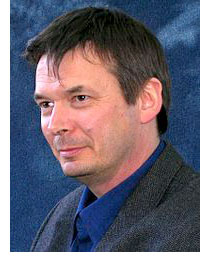
01-31-13 UPDATE:Podcast Update: Time to Read Episode 83: Ian Rankin, 'Standing in Another Man's Grave'
Click image for audio link.
Here's the eighty-third episode of my series of podcasts, which I'm calling Time to Read. Hitting the one-year mark, I'm going to make an effort to get ahead, so that podcast listeners can get the same sort of "sneak preview" effect that radio listeners get each Friday morning.
My hope is that in under four minutes I can offer readers a concise review and an opportunity to hear the author read from or speak about the work. I'm hoping to offer a new one every week.
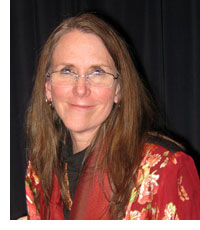
01-30-13:Laura J. Mixon Reads from 'Child Left Behind' at SF in SF on January 19, 2013
Click image for audio link.
"...out of fear, that I would end up..."
—Laura J. Mixon, 'Child Left Behind'
At the last SF in SF, on January 19, 2013, Laura J. Mixon sat down at the microphone, and, in a relatively restrained voice, proceeded to kick every butt in the room to Mars and back. In an intense reading, Mixon quietly made the case for the incredible power of the science fiction genre to grab our minds and our hearts with equal power.
Mixon's latest novel, written as M. J. Locke, is 'Up Against It,' and having heard her reading, I'd put it and pretty much everything she had a hand in at the top of my to-buy list. The kind of writing you hear in this recording does not happen by accident. This is clearly the combination of innate talent and canny knowledge. Mixon knows the science fiction genre, and plays it well. But she also knows the human heart and plays that as well.
I'm going to day as little as possible about this work, as I think it is best experienced cold. What I can say is that Mixon has drafted a very plausible day-after-tomorrow science-fiction backdrop involving human colonization of Mars. She paints a very compelling and believable picture of the hows and the whys of our journey to the red planet. She also does this with a great simplicity. We get just the right level of detail to make every technological innovation seem utterly natural. You almost wonder why this has not yet happened.
Of course all the clever and clear technology is not worth a hoot unless you have both a story, that is, a plot, and characters to involve the reader. Telling the story in the first person, Mixon captures us immediately, by virtue of having created a character who is fairly distrustful and smart, but not an egg-headed explainer.
Then she plays her trump card, an emotional story arc that blends perfectly with the extrapolated future. What we learn sets up a gripping plot and a rather intense emotional reading experience. Mixon is currently working on the novel, and hopes to be finished in the next couple of years.
"I always have a reader in mind, and that's Dick Todd."
— Tracy Kidder
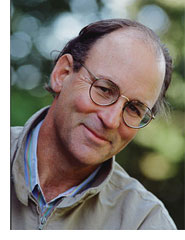
Tracy Kidder has exactly the kind of energy you read about in the pages of 'Good Prose: The Art of Nonfiction.' He's restless, intense and focused, cognizant of details you've not ever considered, but able to express their import to you in a manner that is engaging and easy.
I met with Tracy Kidder at KUSP, and we strolled directly from the lobby to the studio to discuss the book he co-wrote with his longtime editor, Richard Todd. For a man who has sliced and diced our society and our world with words for forty years, Kidder is incredibly easygoing and low-key. In retrospect, this approach has to be a big part of his success as a reporter and writer. But in the moment, as an interviewee, he's simply a nice guy who can put words to matters that most of us have a hard time even thinking about, let alone expressing.
It's rather daunting, to be honest, to interview the author of 'Soul of a New Machine.' Some thirty years ago, I was working for a company called Quotron Systems; if you ever saw the movie Wall Street, you saw Quotron terminals on the desks of the traders. Quotron was an early pioneer for getting its employees on the Internet and, like 'Soul of a New Machine,' an early example of what the 21st century workplace would prove to be. But I should not have been surprised that the man who first accurately described the culture of the electronic workplace would himself seem like a product of that workplace — easygoing and understated.
Even though he did not write about it in the book, I did ask Kidder about the impact of computers on the process of writing. His answer was really quite interesting and in fact tied directly to an aspect of his own writing. Kidder writes fast, he tells us; and he mentioned it more than once during our conversation. He'll bang through a first draft, but then — and this is important — he'll revise it, often beyond recognition, at least ten times. His take on how computers slot into this process offers an interesting, nuanced look at the impact that technology does and does not have.
Tracy Kidder and I spoke quite easily for an hour and we could have spoken for much longer. But I did not want to simply go through a laundry list of the subjects he discusses in the book. I was actually more interested in how he created this book, which offers not lessons so much as perspectives that will entertain and inform writers of fiction and nonfiction as well as readers who simply want to read what the title of his book offers: 'Good Prose.'
08-21-15: Agony Column Podcast News Report : Senator Claire McCaskill is 'Plenty Ladylike' : Internalizing Determination to Overcome Sexism [Incudes Time to Read EP 211: Claire McCaskill, Plenty Ladylike, plus A 2015 Interview with Senator Claire McCaskill]
Agony Column Podcast News Report : Emily Schultz Unleashes 'The Blondes' : A Cure by Color [Incudes Time to Read EP 210: Emily Schultz, The Blondes, plus A 2015 Interview with Emily Schultz]
07-05-15: Commentary : Dr. Michael Gazzaniga Tells Tales from Both Sides of the Brain : A Life in Neuroscience Reveals the Life of Science
Agony Column Podcast News Report : A 2015 Interview with Michael Gazzaniga : "We made the first observation and BAM there was the disconnection effect..."
04-21-15: Commentary : Kazuo Ishiguro Unearths 'The Buried Giant' : The Mist of Myth and Memory
Agony Column Podcast News Report : A 2015 Interview with Kazuo Ishiguro : ".... by the time I was writing this novel, the lines between what was fantasy and what was real had blurred for me..."
Agony Column Podcast News Report : A 2015 Interview with Marc Goodman : "...every physical object around us is being transformed, one way or another, into an information technology..."
Agony Column Podcast News Report UPDATE: Time to Read Episode 199: Marc Goodman : Future Crimes: Everything Is Connected, Everyone Is Vulnerable and What We Can Do About It